The world changed for the bridge team and crew onboard the Container vessel Dali early in the morning of March 26th, 2024. And let us not forget the loss of the bridge maintenance crew when the vessel lost power and struck a support structure of the Francis Scott Key bridge.
While interested parties continue to speculate and hypothesise on the reasons why it happened, We should wait for the official investigation report to provide the facts and investigate, how we can incorporate the lessons learned into vessel our procedures to prevent re-occurrence. Whilst we await the investigator’s findings, It’s worth discussing a statement raised by many seafarers at sea: “You are not going to stop a vessel of 300m long, 40m beam, and with a GRT of 95128 with an anchor travelling at 8.5 knots”. But could an anchor be used to adjust the heading of the vessel?
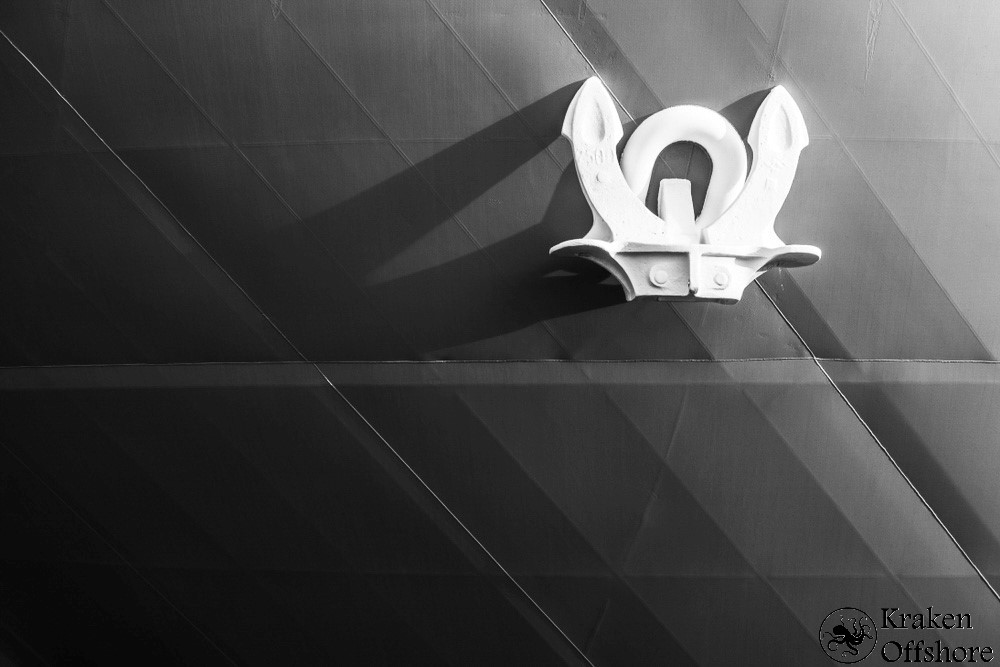
Nowadays, the anchor is primarily used in emergency situations. However, it can also serve as a highly effective tool for preventing accidents and groundings when the engine or steering fails by altering the vessel’s heading while the vessel is making headway.
While a vessel’s anchor may not be able to bring a vessel to a complete stop at high speeds, it can still be used to steady or alter the vessel’s bow laterally by moving the vessel’s point of rotation (pivot point) further forward by allowing the crown and head of the anchor to maintain contact with the seabed as it bounces along whilst remaining under control of the vessel’s windlass, hopefully, regaining control of the heading, and possibly prevent a collision or grounding.
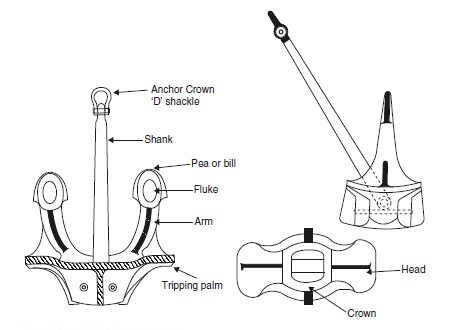
Initially, a single cable should be paid out into the water, adding additional chain in a controlled manner dependant of depth of water available, until the anchor takes effect on the bow heading. The steadying effect of the anchor may be felt immediately after the anchor begins to drag (vessel size-dependent) and ball up with mud. The holding effect of the anchor will also increase as the headway comes off the vessel. It is important, though, that the correct anchor is used, and the anchor is not allowed to dig into the seabed by controlling the amount of chain paid out. The length of the cable paid out should be increased a few links at a time until this balance is found. If a single anchor is not sufficient in reducing the vessel’s speed, a second anchor could also be used to help reduce the ship’s forward motion.
Grounding accidents are not uncommon in the marine community, and unfortunately, they can have disastrous consequences. To handle such situations more effectively, the bridge team could discuss this topic and plan for similar circumstances over coffee. If it’s discussed once on a bridge, It was worth writing the post.
When things go wrong, time is of the essence, and the reaction time is brief. Therefore, by preparing for such contingencies, the response can be instinctive and immediate. If all else fails, never go aground with your anchors in the hawse pipe.
Publications that highlight the usage of anchor usage in an emergency:
- Ship handling for the Mariner, written by Daniel H MacElrevey and Daniel E MacElrevey.
- The Ship Handlers Guide, written by Captain R.W Rowe, FNI.
- Seamanship in the Age of Sail, written by John Harland.

 Kraken Offshore